
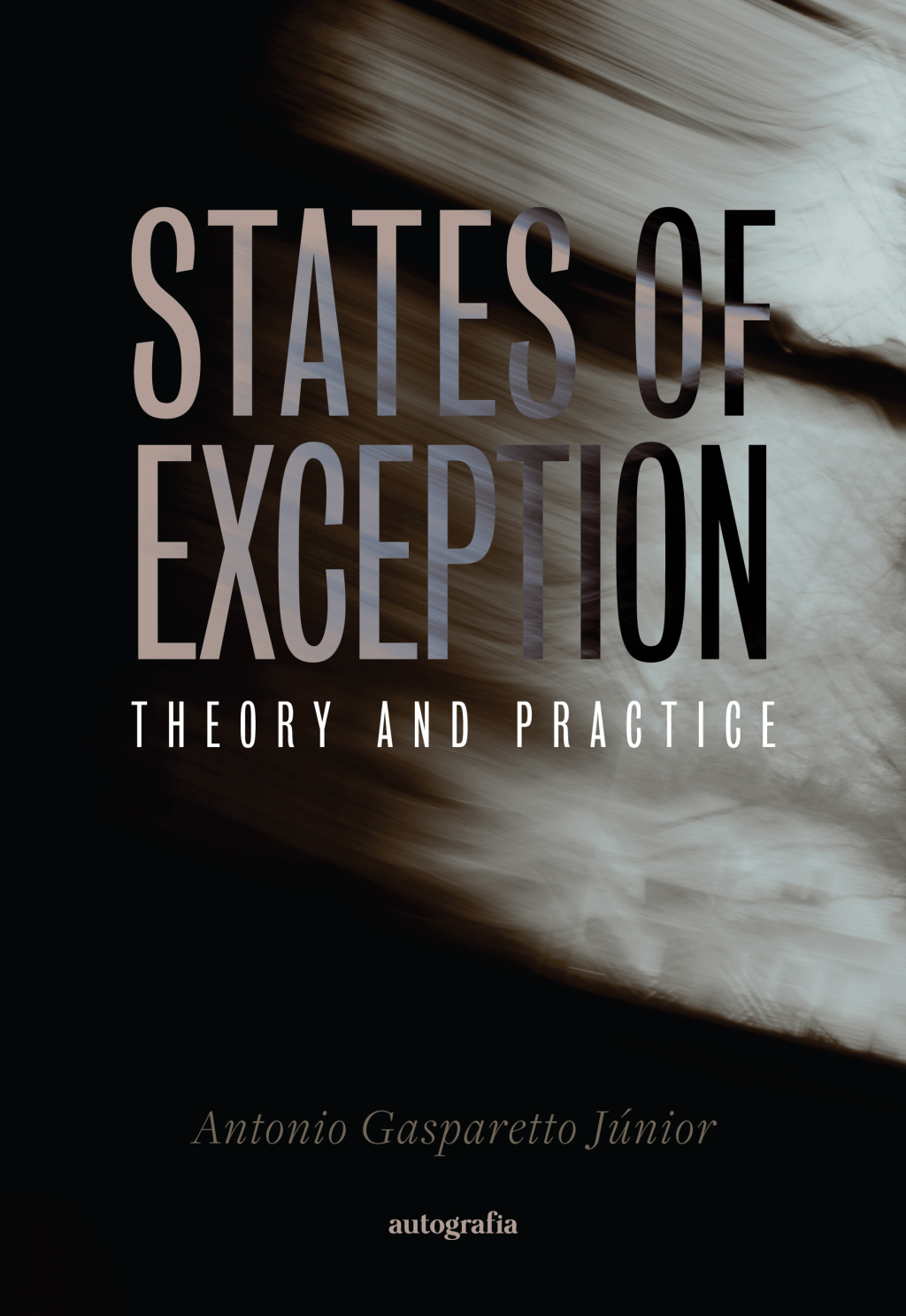
A new book about „States of Exception. Theory and Practices“, edited by Antonio Gasparetto Jr. has just been published, including my chapter on a typology state of emergency regimes:
„The concept of “state of exception” has a rich historical background and has become increasingly prevalent in contemporary discourse. This term is commonly used to draw attention to the current political and legal conditions, emphasizing an extraordinary event or process. However, behind this expression lies a complex concept and a detailed historiography.
Throughout history, the state of exception has been utilized as a means to safeguard the threatened sovereignty of the State and its institutions, sometimes even leading to the suspension of certain rights and guarantees. This state exists at the intersection of a crisis and enduring governmental practices, with the potential to evolve into dictatorships in extreme cases.
In essence, the state of exception represents a delicate balance between maintaining order and protecting individual freedoms. It serves as a critical tool for governments to navigate through times of uncertainty and crisis, while also posing significant challenges to the principles of democracy and rule of law.
This book endeavors to provide a comprehensive examination of the term “states of exception” and its significance in various fields such as politics, law, history, philosophy, and sociology. By offering a conceptual analysis of the term, its historical application, and implications, as well as an international historiographical perspective, this book aims to shed light on the complexities surrounding this topic. […]
The book is structured around two main themes: theoretical approaches to states of exception and analyses of exceptional practices. It is important to note that theory and practice frequently intersect in their respective explorations.
Commencing with theoretical and conceptual reflections, the first chapter titled “The Changing State of Exception” by François Saint-Bonnet delves into the evolving nature of exceptionality. Following this, Anna Migliorini revisits the conceptual perspective in her chapter “Walter Benjamin’s (Two) States of Exception”. Additionally, Matthias Lemke explores contemporary emergency regimes and their typologies in his essay titled “A Dangerous Thing”.
In her analysis of authoritarian liberalism, Marie Goupy delves into the concept of “The Economic State of Emergency, or the Rule of Crisis Law in Liberal Democracies”, taking a more focused approach within the realm of emergencies. Meanwhile, in the subsequent chapter titled “States of Emergency and Human Rights”, Mary Luz Tobón Tobón examines the various ways in which exceptionality was utilized and exploited during the Covid-19 pandemic.
Sébastien Le Gal examines the development of the state of siege in France, from a military device to an exceptional legislation. Le Gal seeks a historical understanding of the effects of emergency legislation in the country. In turn, in his exploration of exceptionality practices, Antonio Gasparetto Júnior delves into the characteristics of
exceptions during the Brazilian First Republic (1889-1930), focusing on the frequent implementation of the state of siege.
Lisandro Cañón shifts the focus to the latter half of the 20th century, examining what he terms the “Terrorist State in Latin America”. Juan Fernando Romero Tobón, on the other hand, delves into the “Sprains of the Exception in Colombia” during the initial years of the 1991 constitution. Lastly, István Szilágyi offers a theoretical and historical analysis on “Geopolitical Changes, the States of Exception, and Modernization Models in Latin America”. Each of these scholars provides valuable insights into the complexities of exceptionality in Latin American history. […]“
Matthias Lemke (2025), A Dangerous Thing: A Proposal for a Framework and Open Questions for Analyzing Contemporary State of Emergency Regimes, in: Gasparetto Jr., Antonio (Ed), States of Emergency. Theory and Practice, Rio de Janeiro, 57-72.
 Das Büro von Matthias Lemke
Hinterlasse einen Kommentar